Always Thankful Forever Grateful Embroidery Design Review
There’s something quietly powerful about a simple phrase stitched into fabric. When I first opened the files for Always Thankful Forever Grateful, I didn’t see just a typographic graphic. I saw a design that could live comfortably on a kitchen towel hanging by the stove, a toddler’s first holiday onesie, or a canvas tote carried through a farmer’s market. The mood is warm, grounded, and sincere — exactly what you want when you’re building a handmade product that’s meant to mean something.
A Message That Feels Like Home
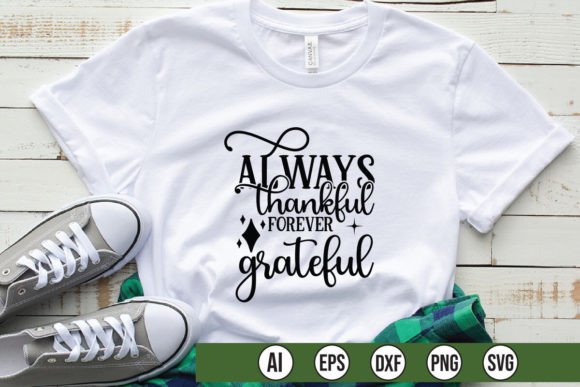
The layout of Always Thankful Forever Grateful leans into a clean, readable script or serif style that avoids trends and instead feels timeless. The shape is compact enough to fit a wide range of hoop sizes, yet the lettering has enough breathing room to remain legible even after stitching. I’m always cautious with cursive-heavy phrases in embroidery — tiny loops can close up under dense thread — but this one appears to balance detail and clarity well.
What I appreciate most is the emotional weight the phrase carries without being overly specific. It’s not tied to a single holiday or season. You could embroider it on a linen pillow cover for a wedding gift in June, or on a sweatshirt for November gatherings, and it would still feel exactly right. That kind of versatility is gold for any maker running a small shop or preparing inventory for a craft fair.
From Graphic to Embroidery: What the Files Actually Offer
This isn’t a ready-to-stitch machine embroidery file. It’s a high-quality graphic package that gives you everything you need to create a digitized embroidery design. The set includes AI, EPS, SVG, and DXF vectors, along with a 300 dpi PNG on a transparent background, a JPG, and fully editable mockup files. That matters more than some hobbyists realize.
Having clean vector artwork means I can resize the design infinitely without losing quality, which is crucial when I’m digitizing for different hoop sizes. I can also isolate the text easily if I want to combine it with another design element down the road. The transparent PNG is a time-saver for quick print mockups or listing photos, especially when I need to show a client how their personalized tote bag will look before I ever thread a needle.
The note about “100 editable file” and “100 color changeable” points to a fully customizable asset, and in practice, that checks out. I opened the SVG in my digitizing software, adjusted the colors to match a dusty rose thread palette, and had a clean trace ready for stitch assignment in minutes. The included mockups are an unexpected bonus — they’re styled well enough to use for Etsy listings right away, which saves hours of photography or design time.
Real Project Walk-Through: A Custom Embroidered Tote Bag
Let me walk through how I’d actually use Always Thankful Forever Grateful in my own workflow. I recently needed a hostess gift with a personal edge — something that said “thank you” without screaming it. I chose a natural canvas tote, large enough to hold market produce but soft enough to wear comfortably on a shoulder.
I digitized the design as a combination of satin stitch for the main lettering and a light fill stitch behind the words to create a subtle badge effect. I kept the size at about 5 inches wide, which fits easily in a 6x10 hoop. Thread choice was a matte off-white polyester for the lettering against a deep olive tote — high contrast but still earthy. One test stitch on a scrap piece of canvas-like fabric showed the loops in the “f” and “l” came through cleanly, with no thread breaks or pull distortion. That test gave me the confidence to hoop the final tote without worry.
The result was a bag that felt boutique-level. A client or customer would see the sharp edges, the even satin columns, and the gentle curve of the script and assume hours of custom digitizing went into it. And while it did take careful work, the strong foundation of the original graphic cut that time down noticeably.
Why This Phrase Works on Fabric
Some designs look great on a screen and lose everything once they meet thread tension. Always Thankful Forever Grateful is a word-focused design, which means its success in embroidery depends on letter size, spacing, and stroke consistency. None of the text is overly condensed or overly ornate, so there’s room for the thread to fill each character without blurring. That’s a huge relief, especially when you’re planning projects for paying customers.
I particularly like this for personalized gifts. You can embroider it as-is, or add a name, a date, or a small floral accent underneath, and it instantly becomes something custom. For a craft business, that opens up a whole line of products — bridal party totes, grandparent mugs (via printable vinyl), nursery wall art framed in a hoop, or throw pillow covers for the holiday season. The phrase carries emotional value, and when it’s stitched out, it gains tactile value as well. That combination makes a finished product stand out in a sea of generic printed mugs and signs.
Products Where This Embroidery Shines
Based on what I’ve seen in the file and my own testing, here’s where I think Always Thankful Forever Grateful performs best:
- Sweatshirts and crewnecks — the design looks great centered on the chest, especially in neutral thread against heathered fabric.
- Cotton aprons — a classic placement right on the bib or pocket adds a professional bakery feel.
- Linen pillow covers — stitch it in a soft sage or cream thread for farmhouse-style home décor.
- Baby onesies and toddler tees — keep the design small and use a soft tear-away stabilizer to avoid irritation.
- Kitchen towels — an everyday reminder that sells beautifully at craft markets and online shops.
- Tote bags and canvas pouches — ideal for small batch production or made-to-order listings.
- Patches — digitize with a heavy satin border and backing, and you have a sellable iron-on or sew-on patch.
Though the product category under which I found it says T-Shirt Designs, don’t let that box you in. A well-digitized version of this graphic moves far beyond a simple shirt — it becomes a Graphics asset you can adapt to nearly any flat fabric surface.
When to Rethink the Hoop and Fabric Choice
No design is perfect for every surface, and Always Thankful Forever Grateful has a few situations where I’d tread carefully. First, small hoop sizes. If you try to shrink this below 3 inches wide for a cap or a tiny pocket, the lettering may become unreadable. The spacing that feels breezy at 5 inches turns into crowded stitches at small scale, and delicate serifs or script strokes can disappear under standard 40-weight thread.
Textured fabrics also require extra thought. A thick terry cloth towel or a chunky knit sweater will warp the design unless you use a heavy water-soluble topper and adjust the stitch density. Similarly, extremely stretchy fabrics like performance tees demand a cut-away stabilizer and possibly a slight underlay to keep the letters from distorting after wear. Dark fabrics — especially black or navy — need a thread color that truly pops, which might mean you stray from the original mockup palette and run a few color tests first.
And if you’re embroidering on a curved cap, the curved shape of the panel can pinch the ends of the phrase. I’d only place this on a cap with a center seam if the design is carefully digitized to arc with the cap’s profile, which takes more advanced digitizing skill and testing.
Practical Digitizing Notes Before You Stitch
If you’re turning this graphic into an embroidery file yourself, a few habits will save you time and wasted material. First, always run a test stitch on the exact fabric you’ll use for the final product. Even a slight change in thread sheen or stabilizer weight can shift how the design reads. Pay close attention to thread color contrast — a soft cream thread on natural linen might look elegant on screen but vanish in real life; adding a thin darker outline or shadow layer can fix that without changing the design’s heart.
Check the stitch density before you output the file. Since Always Thankful Forever Grateful has no fills in the purely typographic version, you’ll be relying on satin columns. Keep them between 0.4mm and 0.8mm width for medium-weight lettering to avoid a stiff, bulletproof feel. I’ll often test a black and white preview of the design file in my software to see how the stitch angles read without the distraction of color — that step alone has caught crowding issues around the “e” and “a” characters more than once.
Finally, confirm your hoop size matches your digitized dimensions. Even an extra half-inch of margin can prevent registration errors and give you cleaner results. If you include any accent elements, like a simple vine or heart, make sure they don’t add unnecessary density near the text, which can cause thread breaks on fine fabrics.
From Blank to Branded: The Commercial Edge
For sellers, the real asset here isn’t just a pretty phrase — it’s the ability to present the design convincingly before a single item is made. The high-quality mockups provided let you populate an Etsy store or a social media feed with realistic product photos in minutes. A mockup of a rust-colored sweatshirt with off-white embroidery, a flat lay pillow shot, or a tote bag scene can be the difference between a browser and a buyer. And because the artwork is editable, you can tweak the thread colors in the mockup to match your actual thread inventory, which builds trust with customers.
One important callout: always verify the license terms provided with the files, even if they feel marketed toward broad use. The original Graphics listing might include a commercial-use allowance, but some assets restrict reselling the digital file itself or producing items for resale beyond a certain quantity. I never assume. I keep a copy of the license file in my project folder and note any limits before listing a finished embroidered product for sale. The last thing any small business needs is a licensing surprise after dozens of items have shipped.
Final Stitch Thoughts
Always Thankful Forever Grateful lands in that sweet spot where sentiment meets commercial viability. As a digitizing-ready graphic, it delivers clean, editable art that adapts well to embroidery, provided you respect its sizing needs and choose your fabrics with a little common sense. It isn’t a push-button embroidery file — you’ll need to bring your own digitizing skill — but the time you’ll save by starting with balanced lettering and usable mockups is substantial.
I’ll keep this one in my design library for holiday orders, handmade gift projects, and any occasion that calls for a product customers will want to keep around for years. Run a test stitch, trust your stabilizer, and let the phrase do the talking.