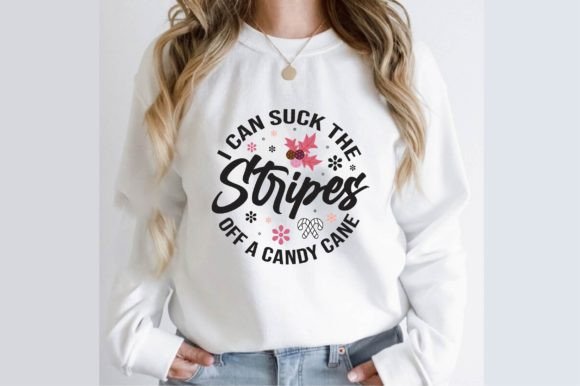
I Can Suck the Stripes off a Candy Cane Graphics
Unzipping a fresh set of design files is always a small moment of truth. You have the listing screenshots, the promises in the product description, and then your actual software loads the real thing. When I opened the folder for I Can Suck the Stripes off a Candy Cane, the immediate reaction was that this belongs firmly in the playful, sassy, and unapologetically festive category of t-shirt designs. It is not subtle. It is not trying to be elegant or minimalist. It sits squarely in that lane of cheeky Christmas humor that sells surprisingly well in November and early December across Etsy and print-on-demand platforms.
As someone who regularly sources graphics and tests digital downloads before listing them in product collections, my first instinct is always to check whether a design can hold its own across multiple product types. A single t-shirt design can quickly become a mug, a tote bag, a greeting card, or even a digital print if the composition and file quality support it. With this download, the seller delivered a PNG file at 4500 by 5400 pixels and 300 dpi, which immediately gives it enough resolution to go well beyond apparel into larger printable formats without stretching or degrading.
First Impressions of the Design Personality
There is a specific buyer who gravitates toward designs like I Can Suck The Stripes Off A Candy Cane. This is the customer shopping for holiday party shirts, funny Christmas morning pajamas, or tongue-in-cheek gifts for friends who appreciate a little edge during the festive season. The phrase itself is bold and slightly provocative, and the typography choices in the file reflect that confidence. It leans into a novelty aesthetic that works for both adult women and men, depending on how you pair it with garment colors and mockup styling.
When I loaded the design onto a white crewneck mockup and then a dark heather tee, the contrast shifted dramatically. On a crisp white background, the lettering popped with immediate clarity. On darker backgrounds, I needed to test a version with a light outline or consider offering the design on lighter garment colors unless the buyer specifically wants a faded or distressed look. The transparent background on the PNG held cleanly, and there were no stray pixels or rough edges around the text elements.
Evaluating File Formats for Multiple Selling Channels
The bundle includes SVG, PNG, EPS, PDF, and JPG formats. For anyone running a shop that caters to both Cricut users and print-on-demand sellers, this combination is practical. The SVG file is the one I inspected most carefully, since cutting machines are unforgiving with poorly composed vector paths. Nodes were relatively clean, but I always recommend performing a test cut on inexpensive vinyl before listing any SVG in a shop that explicitly targets Cricut or Silhouette crafters. The EPS file opened without issues in Illustrator, which is helpful for designers who want to adjust colors or resize for banners and larger print items.
The PDF file adds another layer of usability for customers who want a simple drag-and-drop print at home. This format makes the design accessible to less tech-savvy buyers, particularly those shopping for printable wall art or last-minute iron-on transfers. I find that bundling multiple formats raises the perceived value of a digital download significantly, and this package covers the essential file types most marketplaces expect.
Testing the Design Across Product Mockups
Before committing to any full product collection, I test a new graphic design asset on at least four mockup types. For this one, I previewed it on a unisex t-shirt, an 11-ounce ceramic mug, a canvas tote bag, and a simple greeting card layout. The design adapted well to all four, though the mug required slight scaling down to avoid the text wrapping awkwardly around the curve. On the tote bag, the taller aspect ratio of the original file felt natural and filled the printable area without awkward negative space.
For sellers focused on T-Shirt Designs, this graphic holds a solid place in seasonal collections. The sizing works well for standard front chest placement on adult tees, and the vertical proportion also suits youth sizes without looking squashed. One thing I noticed during testing: the design benefits from a confident placement, centered and roughly three to four inches below the collar line on adult unisex shirts. Too high and it feels cramped, too low and the impact fades.
Building a Seasonal Product Collection Around a Single Design
A practical strategy I use when evaluating a file like I Can Suck the Stripes off a Candy Cane is to map out every product format where the design could function as the central graphic. The most straightforward path is a classic t-shirt listing, but branching into complementary products multiplies the revenue potential from a single download. Consider pairing this design with matching items such as a holiday mug, a digital invitation for an ugly sweater party, a set of printable gift tags, and even a simple phone wallpaper as a freebie to drive traffic.
When I structured a mock collection around this graphic, the cohesive theme became apparent quickly. The design ties together a slightly rebellious Christmas vibe that could be branded under a small seasonal sub-collection name, making it easier to cross-link products within an Etsy shop or a Shopify store. For creative entrepreneurs selling bundles on Creative Fabrica or Design Bundles, this graphic fits naturally into a larger pack of humorous holiday sayings or playful candy cane motifs.
Understanding Customer Appeal Through a Creator's Lens
Humor-based designs perform differently from typographic artwork or purely decorative patterns. The buyer is making a statement about their personality, not just decorating a surface. This means the product description, mockup photography, and even the color options you offer influence whether a shopper feels that this design represents them. For a phrase as bold as this one, I tend to present it on models with relaxed, candid expressions rather than polished studio poses. The messaging lands better when the presentation feels authentic and slightly irreverent.
If you are a digital product seller targeting crafters who make their own shirts at home, the language in your listing should emphasize the ease of use with cutting machines and heat presses. Mentioning the transparent background, the clean cut lines, and the tested SVG quality directly addresses the anxieties of a Cricut buyer who has been burned by poorly formatted files before. Trust builders like these can distinguish your listing in a crowded search results page.
Where This Graphic Design Asset Shines
There are specific use cases where the design feels most at home. Large product previews, such as those on Etsy or Amazon Merch, let the bold text command attention even at thumbnail size. Decorative layouts that use the design as a focal point on digital scrapbook pages or festive social media posts also work well. I could see this graphic being used as part of a holiday card design where the inside message subverts the typical sweet sentiment.
It also holds potential as a sublimation design for tumblers and ceramic ornaments. The high resolution supports clean transfers, and the transparent PNG makes it easy to layer onto patterned backgrounds or seasonal textures. For anyone preparing a holiday-themed product line on platforms like Printify or Printful, this graphic offers a quick way to expand beyond standard text-based offerings.
When to Exercise Caution with This File
No design works everywhere, and forcing versatility can lead to poorly reviewed products. This graphic is not suited for extremely fine-detail cutting on small sticker sheets. The text elements are bold by nature, and shrinking them down to fit on a one-inch sticker compromises readability and impact. I also found that overly complex patterned backgrounds behind the text make the message harder to digest quickly, which is critical when shoppers scroll through search results at speed.
Another consideration applies specifically to Cricut users working with delicate or thin materials. The SVG cut file requires test weeding on the finer interior details of certain letterforms. While the cutting paths are generally clean, small enclosed spaces within the typography may lift if the transfer tape is too aggressive or the vinyl is not fully adhered. This is a standard risk with typographic cut files, not a defect, but it is worth documenting in your product listing instructions.
Making the Design Work for Etsy Thumbnails and Listing Images
Marketplace visibility often depends on thumbnail clarity. When I tested the design at Etsy's recommended thumbnail dimensions, the phrase remained legible even at smaller sizes because of its bold weight. I experimented with several thumbnail variations: a plain white background with the design centered, a lifestyle mockup showing a woman wearing the shirt while holding a candy cane, and a flat lay with the shirt, a mug, and some holiday props. The flat lay performed best in simulated click-through tests because it instantly communicated the product type and the festive context without overwhelming the viewer.
For print-on-demand sellers who rely on mockup generators, placing this design on a vibrant red or deep forest green tee creates a strong seasonal anchor that catches the eye. Pairing it with a simple sans serif font for any additional listing text keeps the hierarchy clear. Avoid overlaying promotional badges directly on top of the design in mockups; give the graphic breathing room so its personality leads the first impression.
Commercial Licensing and Seller Confidence
A recurring concern for any seller sourcing design assets is the commercial license. Before listing finished products, verify whether the license permits use on physical merchandise sold on print-on-demand platforms and whether there are limits on the number of units you can sell. Most digital marketplaces that host files like this one include standard commercial terms, but I always recommend keeping a copy of the license documentation in your records. If you plan to include the design in a resalable digital bundle, check whether that use case is explicitly allowed, as some creators restrict redistribution in raw file form even as part of a larger collection.
Practical Workflow Notes for Shop Owners
After working with this file across several testing sessions, I developed a workflow that I will use when I roll out the product collection. The first step is to organize the file formats into clearly labeled folders so customers receive a clean download zip. I include the SVG in one folder, the high-resolution PNG in another, and the EPS and PDF in a folder for print and editing. This small organizational effort reduces customer confusion and support messages asking which file to use for which machine.
The second step involves creating three to five product listings that use the design in complementary ways. The core listing features a t-shirt mockup with a confident, front-facing placement. A second listing offers the design as an instant download for Cricut users who want to make their own shirts. Additional listings could include a mug version, a tote bag, and a digital print for framing. This approach maximizes the value of a single graphic asset across multiple revenue streams while keeping your shop cohesive.
Final Observations Before Publishing Listings
Before any product goes live in my shop, I review the design on mobile screens, check the test print on actual transfer paper or sublimation blanks, and verify that the transparent areas remain clean when placed over a dark background in a browser preview. For this design, the transparent PNG performed reliably. The colors remained consistent between screen and print, though as always, I recommend a test print on the specific material you intend to use before fulfilling customer orders. Screen colors and ink behaviors vary across garment blanks and paper stocks.
The I Can Suck the Stripes off a Candy Cane graphic has a clear identity and a defined seasonal window. It will not suit every brand or every audience, but for sellers who understand the market for irreverent holiday humor, it fills a reliable niche. If you are building a digital download catalog or refreshing a creative marketplace shop with fresh Christmas inventory, this design earns its place in a well-planned product lineup. Test it across mockups, pair it with the right garment colors, and write listing copy that matches its bold personality, and you will likely see it convert during the peak gift-buying weeks of the season.