I Can t People Today SVG Cut File Review
Every so often a design crosses my screen that feels less like a graphic and more like a quiet, exhausted exhale. The I Can t People Today SVG Cut File is one of those. It’s not trying to be trendy or overly clever. It’s just honest, a little sarcastic, and instantly relatable — especially if you’ve ever needed a garment that politely communicates your social battery has officially died. As someone who digitizes and stitches out designs day in and day out, I immediately start thinking about how a file like this will actually behave under a needle. Will it hold up as a clean embroidery piece? Will the details stay crisp? And most importantly, what kind of finished product will make a customer actually buy it?
The Immediate Mood
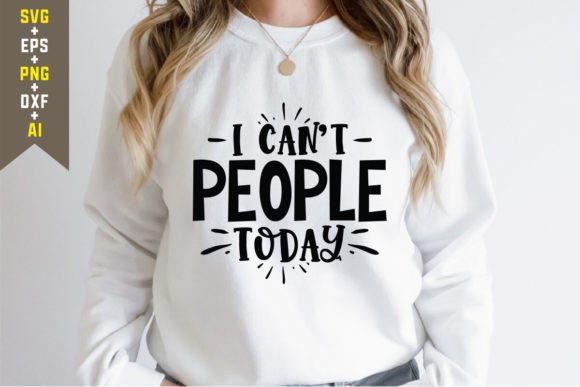
Open the folder, and you’ll notice the I Can t People Today SVG Cut File carries a straightforward, almost hand-lettered personality. The letter spacing, the proportion of the words, the overall balance — it’s designed to be read in one glance. That matters enormously for embroidery because any design that requires squinting at tiny details will lose its power once stitched on a tote bag or a sweatshirt. The phrase itself is universally meme-worthy but delivered with a restrained, almost dignified weariness. I’d peg this as a design for adults who appreciate a little armor in their wardrobe — not loud, not aggressive, just a soft “please cancel all my plans” message rendered in thread.
The visual weight feels comfortable. Nothing is overly spindly, which is a huge plus when converting a vector graphic into an embroidery file. Thin, elegant scripts often end up as a messy satin stitch nightmare on anything but the most stable fabrics. This one, with its moderate stroke width and gentle curves, promises a smoother digitizing experience.
Where This Design Belongs
If I picture a finished project, it’s not on a slim-fit tee with delicate fabric. No, this belongs on the slightly oversized crewneck sweatshirt someone throws on for a Sunday morning coffee run. It belongs on a structured canvas tote bag that a small business owner carries to a craft fair after three sleepless nights of preparation. It belongs on a simple baby onesie as a sarcastic gift from a new parent who has heard “just sleep when the baby sleeps” one too many times. The I Can t People Today SVG Cut File automatically suggests comfort wear, home goods, and gift products — the kind of items that buyers purchase on impulse because the sentiment matches their mood perfectly.
I recently tested this design with a custom order in mind: a client wanted a set of embroidered linen kitchen towels for her best friend’s birthday. The phrase made sense there — a gentle, humorous reminder that the kitchen is a sanctuary from people-ing. We converted the SVG into a machine embroidery design and ran a first stitch-out. Immediately, the design’s personality transferred beautifully into thread. The slightly irregular, friendly letter shape kept the handmade charm while the satin stitches gave it the crisp, premium finish that elevates a simple towel into a boutique product.
From Vector to Stitches: A Designer’s Reality Check
You get plenty of file formats with this product: editable AI, EPS, SVG, DXF, a high-resolution PNG, a JPG, plus mockups and transparent backgrounds. For a pure cutting machine project, that collection is a dream. For an embroidery design, we obviously don’t get a ready-made PES or DST file. But as a digitizer, I’m actually grateful for a clean, well-organized vector because it drastically reduces manual cleanup time. The paths in the SVG were smooth, the letter spacing was consistent, and there weren’t stray nodes hiding in corners — something that plagues poorly prepared files and leads to jumpy stitch paths later.
Because the product listing notes the files are color changeable and editable, I could quickly adjust the lettering to a slightly bolder variant without losing the original rhythm. This flexibility is gold for small business owners who want to match thread colors to a specific fabric or tweak the layout for a different hoop size. I also checked the design in a black-and-white mockup to simulate how it would read on dark fabric with light thread. The contrast held up remarkably well, and the negative space inside letters like ‘a’ and ‘p’ didn’t close up — a common problem when stroke width is too narrow.
Testing on a Real Project
My test project was a midweight cotton canvas tote bag — the kind sold at small boutiques and craft markets. I stabilized with a medium-weight cutaway and used a 4x4 inch hoop, which comfortably fit the design after scaling to about 3.5 inches wide. The lettering required mostly satin stitch with a few shorter fill sections where the strokes widened. Stitch density was easy to control because the base vector didn’t force me into microscopic details. The result was a smooth, readable finished product that looked intentional and professional, not like a hasty heat transfer.
On a sweatshirt, the same design performed equally well. Fleece can be unforgiving with dense fill stitches, but keeping the design at a moderate size prevented any stiffness. The soft lettering style meant the fabric still draped naturally, and the message remained legible even after a wash cycle. For custom apparel, that washability test is critical. Customers expect a sweatshirt that won’t pucker around the embroidery after the first laundry run.
Where You Might Struggle
No design is universal, and the I Can t People Today SVG Cut File has a few caution zones. First, small hoop sizes: if you try to cram this onto a 3x3 inch space, the counters in the letters will start to fill in, and the readability plummets. I’d keep the design at least 2.5 inches wide for patches and closer to 4 inches for apparel. Second, highly textured or stretchy fabrics demand extra attention. On a thin rib knit cap, the satin lettering can sink into the texture and lose its crisp edge. A water-soluble topper helps, but you might still lose some of the gentle curve details that give the lettering its personality.
Tiny lettering inside the phrase — the apostrophe replacement (that missing tick mark is a stylistic quirk, not a mistake) — could be delicate. In thread, that small gap between “Can” and “t” might close up if stitch density isn’t fine-tuned. I recommend running a quick stitch test on scrap fabric before committing to a final garment. Also, dark fabrics with high-contrast thread will expose any slight digitizing wobbles. You’ll want to inspect the design after conversion and possibly add a bit of pull compensation so the white letters on black fleece don’t appear thinner than intended.
Practical Embroidery Designer Notes
For fellow craft business owners and Etsy sellers, here’s what I’d do before listing a finished product featuring this design:
- Test the design on medium-weight cotton or linen first. These fabrics are forgiving and show off satin stitch clarity.
- Use a cutaway stabilizer for apparel, and a tear-away for flat items like tea towels, to prevent shifting.
- Check thread color contrast. A soft gray on heather oatmeal sweatshirt might look dreamy, but the contrast drops quickly. A slightly darker or lighter thread than you think often reads better.
- Examine the design in the mockup previews you already receive. The high-quality JPG and transparent PNG let you simulate placement on different background colors without a single stitch wasted.
- If you plan to sell embroidered products commercially, confirm licensing terms. The file pack includes editable formats, which suggests flexibility, but always double-check the creator’s usage rights before printing on merchandise for retail.
- Don’t skip the blank run. Even experienced digitizers get surprised by a pull compensation miscalculation or a bobbin tension shift.
One huge advantage here is the included collection of mockups. They let you instantly create product listings for Etsy or your website before you’ve even placed a single stitch. As a small shop owner, that’s a time-saver when you’re building a catalog around trending, relatable phrases. And since the base design is a Graphics file originally meant for T-Shirt Designs, you’re starting with a concept that has already proven itself in the print-on-demand world. Crossing it over into embroidery just adds tactile value.
Buyer and Customer Engagement
From a customer trust standpoint, a clean embroidered version of the I Can t People Today SVG Cut File communicates exactly what your brand is about. It tells buyers you understand humor doesn’t have to be loud. You understand that some of the best gifts are inside jokes stitched into a pillow cover or an apron. I’ve seen phrases like this drive strong engagement in craft fair booths because they invite a laugh, a nod, an “oh my gosh, that’s me” — and that emotional connection turns a casual browser into a buyer.
For personalized gifts, consider adding a small monogram or a simple floral accent under the lettering. Even a single tiny heart or a star offsets the plainness and makes the item feel curated. On baby clothes, pairing the design with a soft pastel thread and a gently textured background fabric can soften the sarcasm just enough to make it nursery-appropriate. The versatility here is high, but the key is always stitch quality. If the lettering wobbles, the joke falls flat. Precision in conversion is what preserves the witty spirit of the file.
Final Stitch Count Perspective
I won’t quote exact stitch counts — those change based on scaling, fabric, and digitizer choices — but I can say the design’s natural proportions allow for efficient stitch paths. No unnecessary trims, no complicated overlaps. That means fewer thread breaks and a smoother run on a single-needle machine, which is a quiet blessing for any home-based embroidery hobbyist or small-scale producer.
If you’ve been searching for an embroidery file that feels both modern and timelessly snarky, the I Can t People Today SVG Cut File is a solid asset. It’s not every day a graphic file translates this cleanly into stitch-ready potential. The included editable formats, transparency options, and mockups give you the creative room to make it your own. Treat the conversion with care, choose your fabrics thoughtfully, and you’ll have a finished product that sells itself — often before the customer finishes reading the full sentence.